9 Products
Duramax CCV Reroute/Delete kits
Why Upgrade the Duramax CCV System?
The 6.6L Duramax diesel engine, used extensively in 2004.5–2024 Chevrolet Silverado HD and GMC Sierra HD trucks, is known for its durability and towing power. But whether you're running an LLY, LBZ, LMM, or a newer LML (2011–2016) or L5P (2017–2024) engine, all factory Duramax platforms share one common flaw: their CCV (Crankcase Ventilation) system.
The stock system recirculates oil vapors back into the intake tract for emissions compliance, but this often leads to oil buildup in the intercooler, carbon deposits on the turbo, dirty intake valves, and sensor contamination. These issues become even more severe under high mileage, heavy loads, or performance tuning.
That’s why more Duramax owners are switching to a SPELAB Duramax CCV reroute kit or CCV delete system—to stop oil vapor from entering the intake system, maintain airflow integrity, reduce maintenance, and extend the life of their engines.
Benefits of Upgrading the LML and L5P Duramax CCV Reroute
For owners of the 2011–2016 LML Duramax and the 2017–2024 L5P Duramax, the stock CCV filters (such as the oil separators used on LML engines) often become saturated or clogged around 60,000 to 80,000 miles. This leads to a dangerous rise in crankcase pressure, which can cause oil leaks, compromised turbo seals, and other costly issues.
By contrast, the SPELAB L5P CCV reroute kit uses either a catch can or vent-to-atmosphere system to redirect and isolate oil vapor—completely removing it from the intake path. With this upgrade, you get:
-
A cleaner intake manifold and intercooler
-
Stable internal engine pressure
-
No more costly CCV filter replacements
-
Improved throttle response and combustion efficiency
For any Duramax driver focused on longevity, towing stability, or tuned performance, this is a smart, preventative upgrade that pays off quickly.
Key Features of the SPELAB Duramax CCV Reroute Kits
SPELAB has engineered a full range of Duramax CCV reroute and delete kits to fit 6.6L diesel engines, including LLY, LBZ, LMM, LML, and L5P platforms. These kits are built with high-temperature, corrosion-resistant materials, ensuring long-term reliability even under heavy-duty use.
Whether you own a 2006 Silverado 2500HD with an LLY engine or a 2023 GMC Sierra Denali with a L5P, the SPELAB solution offers:
-
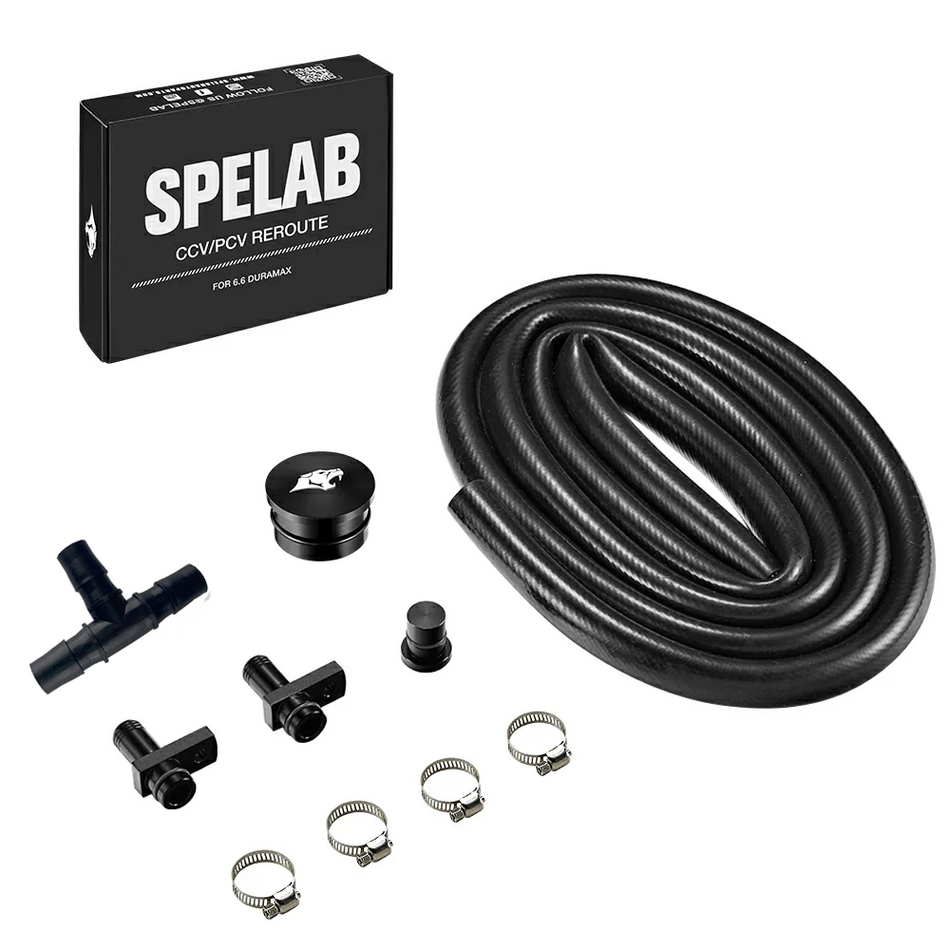
Precision CNC-machined block-off plates and quick-connect fittings for perfect sealing
-
Oil-resistant, high-flow ventilation hoses designed to fit factory locations
-
Optional catch cans with internal baffling for two-stage vapor separation
-
Plug-and-play installation—no tuning, cutting, or wiring required
Every CCV PCV ReRoute Delete Kit includes all hardware and instructions, making it a practical upgrade for a cleaner intake system and lower maintenance demands.
Installation Overview for Duramax CCV Reroute Kits
Installing a SPELAB Duramax CCV reroute kit is a straightforward process that typically takes 1–2 hours and requires only basic tools. The steps are easy to follow:
Quick Installation Steps:
-
Remove the factory CCV hose connected to the intake pipe
-
Seal off the intake port using the provided billet plug or silicone cap
-
Attach the reroute hose and direct it to either a catch can or atmosphere
-
Secure all fittings and route lines away from hot engine components
-
Start the engine and inspect for leaks or pressure build-up
No ECU tuning is required, and the installation does not affect the factory intake configuration. It’s a simple, effective upgrade that most DIYers can complete with ease.
Installation Overview
The SPELAB CCV reroute kit can typically be installed in 1–2 hours using basic hand tools. No ECU tuning is required, and it doesn't interfere with the factory intake system. Here’s a quick step-by-step overview:
-
Remove the stock CCV hose and disconnect it from the intake tube.
-
Use the included billet plug or silicone cap to seal off the intake port.
-
Attach the supplied ventilation hose and route it either to a catch can or directly to atmosphere (depending on your setup).
-
Secure all lines with clamps and ensure the hose is routed away from hot or moving components.
-
Start the engine and inspect the system for leaks, abnormal pressure, or ventilation issues.
Thanks to its bolt-on design, this upgrade is accessible for most truck owners—even without professional mechanical experience.
Maintenance Tips & Long-Term Use
Once installed, the Duramax CCV reroute system requires minimal upkeep compared to stock CCV filters, which must be replaced regularly. To ensure consistent performance, follow these basic maintenance tips:
-
Inspect and drain your catch can (if equipped) every 3,000–5,000 miles to prevent overflow.
-
Check all hose connections periodically to ensure they're tight and free of wear or cracking.
-
Make sure the breather path remains unobstructed to avoid pressure build-up.
-
If you’re using an open vent system, consider adding a small breather filter to prevent dust intrusion during reverse airflow events.
This system is especially beneficial for trucks operating under heavy load, in extreme climates, or with performance tuning—providing a cleaner intake system and reducing long-term engine wear.
Legal Considerations for Duramax CCV Delete Kits
In many U.S. states—particularly California and other CARB-regulated areas—altering or removing emissions-related components such as the CCV (Crankcase Ventilation) system is not permitted for street-driven vehicles. This includes routing crankcase gases away from the intake system or venting to the atmosphere.
Important Notes:
-
Always verify your state's emissions laws before purchasing or installing a CCV PCV reroute delete kit.
-
These kits are not EPA- or CARB-certified, and using them on public roads may result in fines or failed inspections.
-
SPELAB designs these systems for race-only, off-road, and agricultural applications, where emissions compliance is not legally required.
By understanding the legal landscape and using the kit in the correct context, you can enjoy the full benefits of a Duramax CCV reroute system while avoiding unintended regulatory issues.
Select Your Vehicle
-
-7%
-
-
-
-20%
13 reviews4.54 13 reviewsRegular price From $169.77Fitment:
OBDII Tuner only compatible with 2017-2023 L5P 6.6L Duramax -
-6%
28 reviews4.89 28 reviewsRegular price From $1,349.00Regular price$1,440.67Sale price From $1,349.00Fitment:
2011-2015 Chevy /GMC Duramax Diesel LML, Silverado and Sierra pickup trucks -
-6%
-
-3%
5 reviews4.6 5 reviewsRegular price From $1,249.99Regular price$1,314.99Sale price From $1,249.99 -
-14%
No reviewsNo reviewsRegular price From $3,166.99Regular price$3,699.99Sale price From $3,166.99 -
-23%
Let customers speak for us
from 5347 reviews
So far it looks nice and fit pretty well.
Welds look solid and professional quality, I have not installed them yet but I did put them in place under truck to ensure length and thus far everything looks good. I will give an update after install and on the road with them
Product came in earlier than expected and is made out of high quality materials. SPELAB hasn't let me down yet!!
The product installed perfectly high-quality superior part. For my 2022 f350. Coolant reroute kit.
Everything works great all parts fit hangers fit have pictures if needed
This is a really nice set up inexpensive but well-made. Make sure you use 1/4 inch drive and torque wrench, if you get the half socket 10mm and multi size extensions even better it’ll make getting those two back bolts easy
Makes truck breathe better and will definitely blow your y bridge out so do that while you’re in there looks great and fits up pretty good not perfect
Installed this SPELAB EGR Throttle Valve Delete on my 6.7 Cummins and the fitment was perfect. The kit was well made, installation was straightforward, and all the necessary parts were included. Everything lined up as it should and the truck runs great. Highly recommend for anyone looking for a quality replacement component.
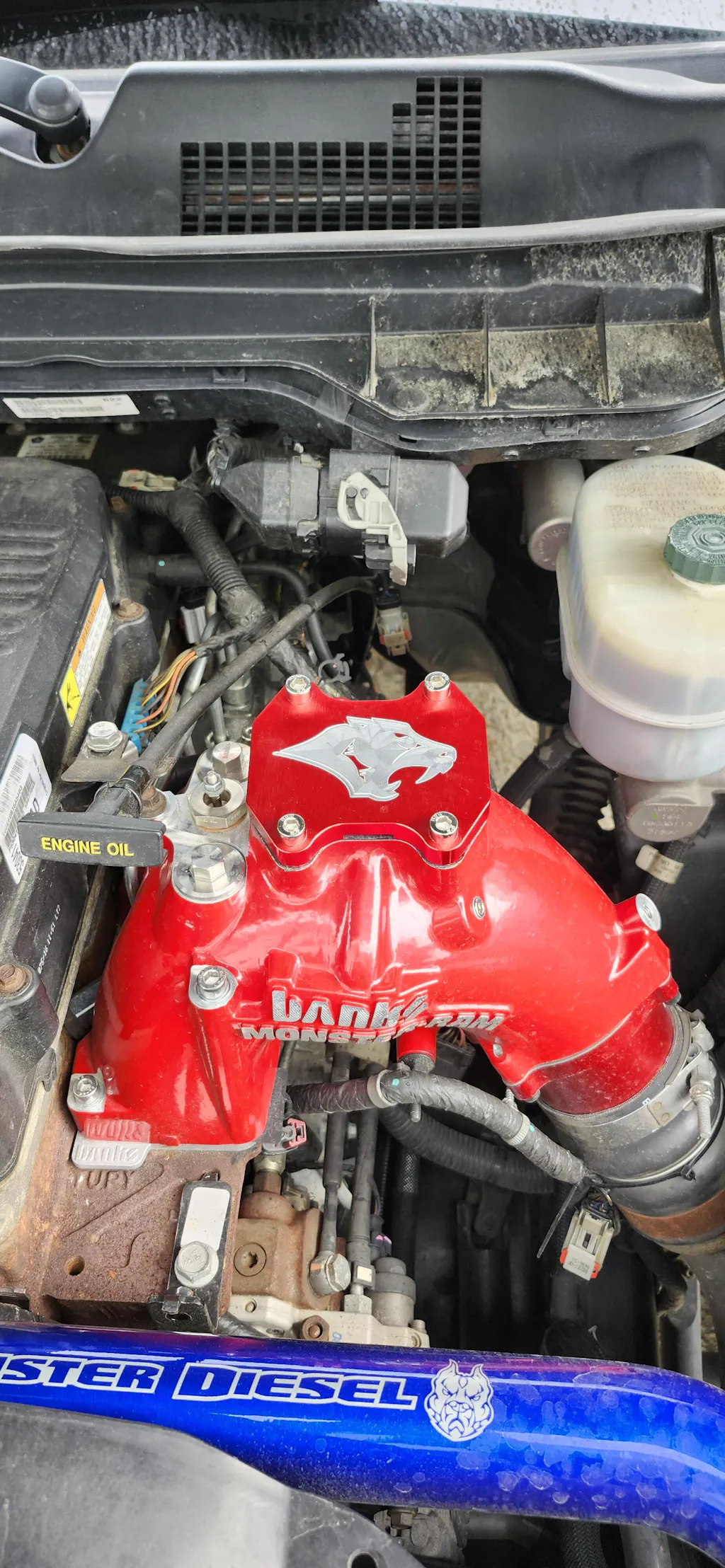
I originally had the Banks Monster Ram intake with grid heater delete, and costed $1200. Recently I decided to give Spelab a try for their 3.5” pusher style intake with grid heater delete. Fraction of the price and performs the same. Only regret I have was my purchase of Banks.
Great product
Good product fast sipping was not that bad of a job
Nicely done ✅
Easy installation and everything fit perfectly. The kit is well-made, comes with the necessary components, and worked as expected. Shipping was fast and the quality exceeded my expectations. Highly recommend for anyone looking for a reliable EGR delete kit.
Very impressed with the quality of the cooler. Couldn’t find any instructions for the install. However, I was able to figure it out and plan to post a video for anyone else who may need help with the install.
Installed this on my 2015 6.7 Powerstroke and everything fit perfectly. Quality parts, straightforward install, and noticeable improvement in engine temps and reliability. Would definitely recommend this kit to anyone doing an EGR delete.
Duramax CCV Reroute/Delete kit FAQs
The LML (2011–2016) uses an integrated oil separator built into the valve cover, requiring a reroute kit to block off the factory vent and redirect blow-by. The L5P (2017–2024) features a more modular CCV system, making it easier to upgrade using SPELAB’s bolt-on reroute kit.
No. The SPELAB CCV PCV Reroute Delete Kit is fully bolt-on and does not require any ECU tuning or DTC suppression. Even when paired with a catch can, it won’t affect sensor readings or engine management functions.
Yes. SPELAB’s reroute kits are designed to be fully compatible with OEM intake setups and turbo piping. They include precision fittings and clamps to ensure a sealed and secure installation without altering the factory layout.
We recommend checking and draining the catch can every 3,000–5,000 miles, depending on driving conditions, engine wear, and climate. Trucks under heavy loads or in hot environments may require more frequent checks.
In many states, modifying the CCV system is considered an emissions-related change and may cause the vehicle to fail inspection—especially in CARB-regulated areas like California. These kits are intended for off-road, agricultural, or competition use only. Warranty implications vary; check with your dealer before installing.