15 Products
Coolant Reservoir Tank
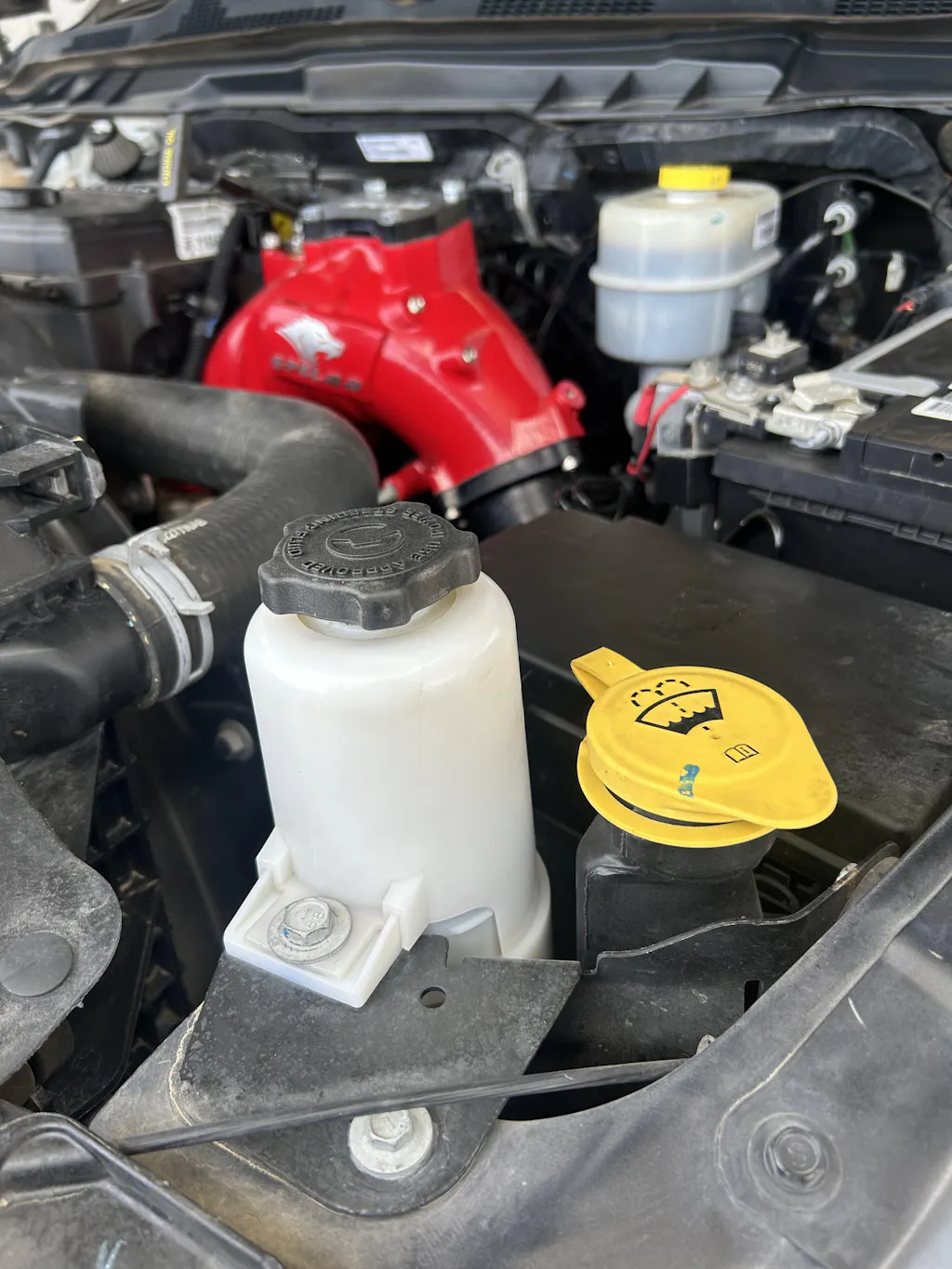
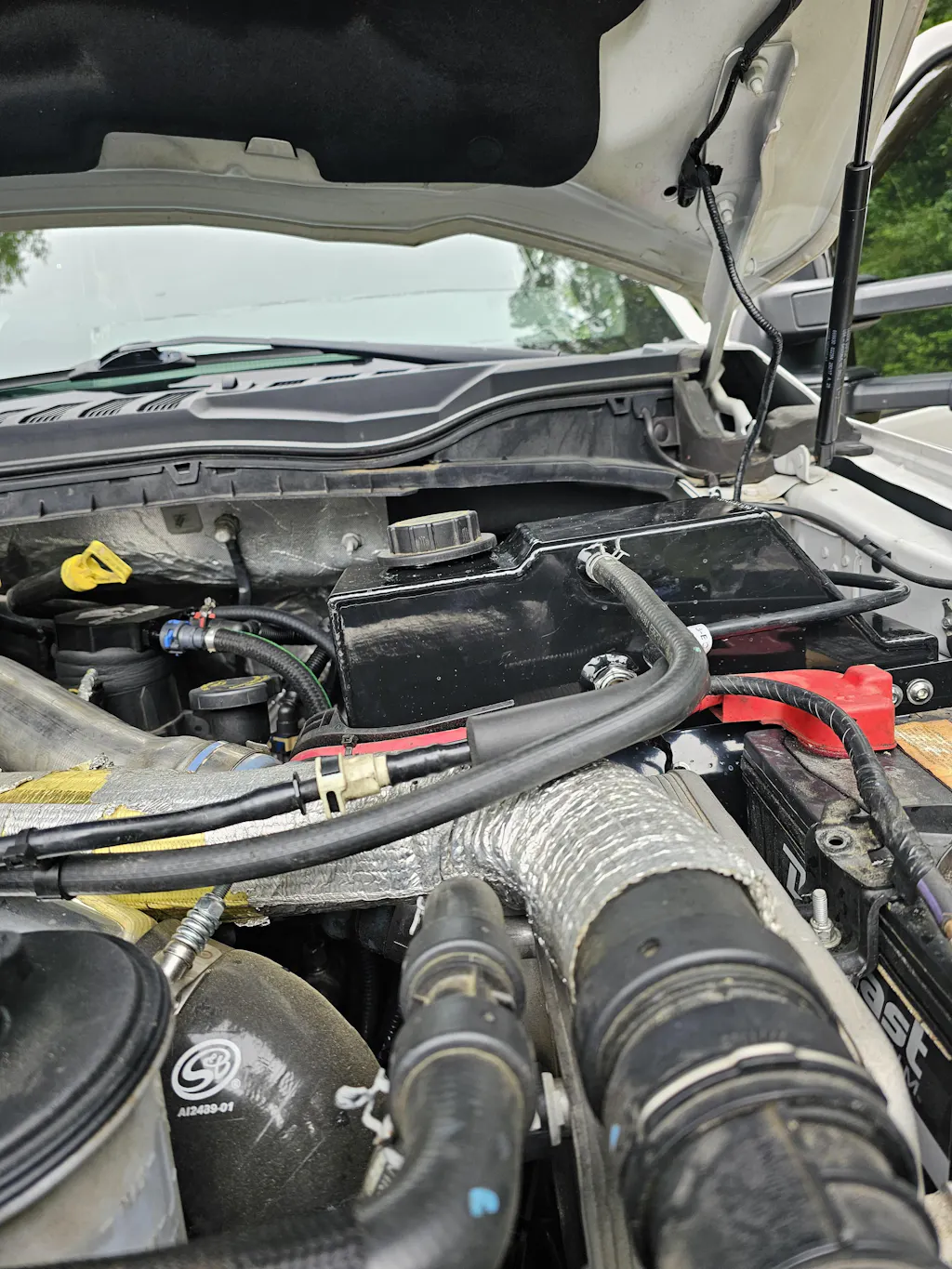
Aluminum Coolant Reservoir Tanks for Powerstroke, Cummins & Duramax
This collection focuses on aluminum coolant reservoir tanks for Ford Powerstroke, Ram Cummins, and GM Duramax diesel trucks. These tanks are built for truck owners replacing an aging plastic coolant reservoir, cracked Powerstroke degas bottle, or leaking coolant overflow tank with a stronger aluminum upgrade.
Start by matching your truck’s make, model year, engine platform, cap style, sensor setup, and hose routing before ordering. A coolant reservoir that fits a 6.0L Powerstroke will not fit a 6.7L Powerstroke, and a Duramax LML tank is not the same as an LMM or LB7 / LLY / LBZ tank.
Choose by Diesel Platform
The easiest way to choose the right coolant tank is to start with your truck platform. Powerstroke, Cummins, and Duramax owners often use different search terms, but the buying logic is the same: confirm the year, engine, mounting points, hose layout, cap style, and sensor compatibility.
| Truck Platform | Common Fitment | What Buyers Usually Search | What to Check Before Ordering |
|---|---|---|---|
| Ford Powerstroke | 2003–2007 6.0L, 2008–2010 6.4L, 2011–2019 6.7L F-Series Super Duty | Powerstroke degas bottle, coolant reservoir, coolant overflow tank | Confirm engine generation, factory sensor setup, cap style, and hose routing. |
| Ram Cummins | Selected 2013–2018 Ram 2500 / 3500 6.7L diesel trucks | 6.7 Cummins coolant reservoir, Ram coolant tank, aluminum coolant reservoir | Confirm model year, truck configuration, mounting points, and coolant hose layout. |
| GM Duramax | 2001–2007 LB7 / LLY / LBZ, 2007.5–2010 LMM, 2011–2016 LML Silverado / Sierra HD | Duramax coolant reservoir, LML coolant tank, LMM overflow tank, LB7 coolant reservoir | Confirm Duramax engine code first. LB7 / LLY / LBZ, LMM, and LML tanks are not interchangeable. |
Big 3 Diesel Truck Fitment Guide
Use this fitment guide as a starting point, then open the product page to confirm exact compatibility before checkout. After you find your platform in the table, compare the product photos, hose locations, mounting points, cap style, and sensor setup with your factory tank before placing the order.
| Make | Model | Years | Engine | Product Direction |
|---|---|---|---|---|
| Ford | F-250 / F-350 / F-450 / F-550 | 2003–2007 | 6.0L Powerstroke | 6.0L Powerstroke coolant reservoir |
| Ford | F-250 / F-350 / F-450 / F-550 | 2008–2010 | 6.4L Powerstroke | 6.4L Powerstroke coolant reservoir |
| Ford | F-250 / F-350 / F-450 | 2011–2019 | 6.7L Powerstroke | 6.7L Powerstroke coolant reservoir |
| Ram | Ram 2500 / 3500 | 2013–2018 | 6.7L Cummins Diesel | 6.7L Cummins coolant reservoir |
| Chevy / GMC | Silverado / Sierra 2500HD / 3500HD | 2001–2007 | 6.6L Duramax LB7 / LLY / LBZ | LB7 / LLY / LBZ Duramax coolant reservoir |
| Chevy / GMC | Silverado / Sierra 2500HD / 3500HD | 2007.5–2010 | 6.6L Duramax LMM | LMM Duramax coolant overflow tank |
| Chevy / GMC | Silverado / Sierra 2500HD / 3500HD | 2011–2016 | 6.6L Duramax LML | LML Duramax coolant reservoir |
Why Upgrade to an Aluminum Coolant Reservoir Tank?
Factory plastic coolant reservoirs, overflow tanks, and Powerstroke degas bottles live through years of heat cycles, cooling-system pressure, vibration, and age. Over time, the molded seams, hose necks, cap area, and mounting points can become weak spots, especially on diesel trucks that tow, idle hard, or work in hot weather.
Many SPELAB aluminum coolant reservoirs use TIG-welded 6061 aluminum construction and pressure-tested welding for a stronger replacement over aging factory plastic tanks. Depending on the application, selected tanks may also include a sight glass window, external level tube, billet cap option, or internal baffling. Always check the specific product page for exact features before ordering.
- Seam splitting: Aging plastic tanks often fail around molded seams, hose necks, or stress-heavy mounting points.
- Coolant loss under load: A small crack may only open when the truck builds heat and pressure during towing or long highway driving.
- White crusty residue: Dried coolant around the cap, hose connections, or tank body can point to a pressure-side leak.
- Powerstroke degas bottle issues: Ford diesel owners often call this part a degas bottle, especially on 6.0L, 6.4L, and 6.7L Super Duty trucks.
- Cooling-system limits: A stronger aluminum tank can replace a weak plastic reservoir, but it will not fix a bad radiator, thermostat, water pump, fan clutch, weak pressure cap, head gasket problem, or trapped air in the system.
Coolant Reservoir vs Overflow Tank vs Degas Bottle
Truck owners use several names for this part. “Coolant reservoir” and “coolant overflow tank” are common general terms. Ford Powerstroke owners often say “degas bottle,” especially when talking about 6.0L, 6.4L, and 6.7L Super Duty trucks. GM Duramax and Ram Cummins owners usually search by coolant reservoir, coolant tank, or overflow tank.
The exact function and pressure design can vary by vehicle, so do not order by name alone. Always match the tank to the truck’s year, engine, sensor, cap, and hose routing.
What to Check Before Ordering
Most wrong orders happen because the buyer matches only the engine family and misses the details. Before adding a coolant reservoir to your cart, confirm these points.
- Model year: Split-year platforms can use different parts.
- Engine platform: Powerstroke, Cummins, and Duramax tanks are not universal.
- Sensor compatibility: If your truck uses a factory coolant level sensor, confirm the product supports it.
- Cap style: Some tanks reuse the OEM-style pressure cap, while others may use a different cap setup.
- Hose routing: Compare hose neck locations before ordering, especially on trucks with previous modifications.
- Mounting points: Confirm the tank is designed for factory mounting locations.
- Cooling-system condition: A new tank will not fix a bad hose, weak cap, stuck thermostat, clogged radiator, or air trapped in the system.
Installation Notes
Most coolant reservoir replacements are straightforward for experienced DIY owners, but the cooling system must be handled carefully. Always let the engine cool completely before opening the cap or disconnecting coolant hoses.
- Let the engine cool fully before starting the job.
- Remove the factory plastic reservoir and disconnect the hoses carefully.
- Install the aluminum tank using the correct mounting points.
- Reconnect hoses and refill with the correct coolant for your truck.
- Bleed air from the cooling system according to the vehicle’s service procedure.
- Recheck coolant level, hose clamps, and cap seal after the first heat cycle.
Selected Performance Car Applications
Although this collection is built around Big 3 diesel truck applications first, SPELAB also offers selected aluminum coolant overflow tanks for performance cars. These applications include platforms such as Ford Mustang, Chevrolet Camaro, Dodge Charger / Challenger, Chrysler 300C, Honda Civic Type R, Subaru WRX / STI, Subaru BRZ, Toyota 86, and Scion FR-S.
For performance cars, the buying checks are similar: confirm model year, engine, mounting points, hose routing, cap style, and whether the tank is designed for your exact chassis.
Related Cooling System Parts
If you are refreshing more than the coolant reservoir, you may also want to inspect related cooling-system parts such as the radiator, coolant tube, and coolant filtration system. A stronger aluminum tank is only one part of a healthy cooling system.
Filter products
- ENGINE
-
POWERSTROKE
- DPF Delete Exhaust
- All In One Kit
- EGR Delete Kit
- CCV PCV Reroute Kit
- DPF Delete Dual Exhaust
- Tuner
- Intercooler Pipe Kit
- Up-Pipe
- Intercooler
- CP4 Bypass Kit
- CCV Recirculating Kit
- Muffler
- Downpipe
- Intake Manifold
- Air Intake Kit
- Radiator
- Oil Catch Can
- Differential Cover
- Coolant Tube
- Valve Cover
- Transmission Pan
- Coolant Expansion Tank
- Exhaust Manifold
- Turbo
-
DURAMAX
- Tuner
- EGR Delete Kit
- CCV Reroute/delete kit
- DPF Delete Exhaust
- DPF Delete Dual Exhaust
- All In One Kit
- Muffler
- Up-Pipe
- Downpipe
- Intake Elbow Bridge Kit
- Intercooler
- Intercooler Pipe Kit
- Air Intake Kit
- Radiator
- Differential Cover
- Valve Cover
- Oil Pan
- Cooler Line Kit
- Fuel Sump Return Kit
- Tonneau Cover
- Coolant Tube
-
DODGE RAM
- Tuner
- EGR Delete Kit
- CCV Reroute/delete kit
- EGT Relocation Kit
- DPF Delete Exhaust
- All In One Kit
- Muffler
- Air Intake Kit
- Intercooler
- Intercooler Pipe Kit
- Radiator
- Valve Cover
- Differential Cover
- Intake Manifold
- Coolant Bypass Kit
- Coolant Leak Repair Kit
- Fuel Rail Plug
- Fuel Tank Sump Kit
- Oil Catch Can
- Oil Pan
- Coolant Tube
- ALL-IN-ONE KITS
- CATEGORIES
- ON SALE
Let customers speak for us
from 5347 reviews
So far it looks nice and fit pretty well.
Welds look solid and professional quality, I have not installed them yet but I did put them in place under truck to ensure length and thus far everything looks good. I will give an update after install and on the road with them
Product came in earlier than expected and is made out of high quality materials. SPELAB hasn't let me down yet!!
The product installed perfectly high-quality superior part. For my 2022 f350. Coolant reroute kit.
Everything works great all parts fit hangers fit have pictures if needed
This is a really nice set up inexpensive but well-made. Make sure you use 1/4 inch drive and torque wrench, if you get the half socket 10mm and multi size extensions even better it’ll make getting those two back bolts easy
Makes truck breathe better and will definitely blow your y bridge out so do that while you’re in there looks great and fits up pretty good not perfect
Installed this SPELAB EGR Throttle Valve Delete on my 6.7 Cummins and the fitment was perfect. The kit was well made, installation was straightforward, and all the necessary parts were included. Everything lined up as it should and the truck runs great. Highly recommend for anyone looking for a quality replacement component.
I originally had the Banks Monster Ram intake with grid heater delete, and costed $1200. Recently I decided to give Spelab a try for their 3.5” pusher style intake with grid heater delete. Fraction of the price and performs the same. Only regret I have was my purchase of Banks.
Great product
Good product fast sipping was not that bad of a job
Nicely done ✅
Easy installation and everything fit perfectly. The kit is well-made, comes with the necessary components, and worked as expected. Shipping was fast and the quality exceeded my expectations. Highly recommend for anyone looking for a reliable EGR delete kit.
Very impressed with the quality of the cooler. Couldn’t find any instructions for the install. However, I was able to figure it out and plan to post a video for anyone else who may need help with the install.
Installed this on my 2015 6.7 Powerstroke and everything fit perfectly. Quality parts, straightforward install, and noticeable improvement in engine temps and reliability. Would definitely recommend this kit to anyone doing an EGR delete.
Coolant Reservoir Frequently Asked Questions
Common signs include coolant smell, visible cracks, yellowed plastic, dried coolant around the seams, low coolant warnings, coolant loss after towing, or residue around the cap and hose connections.
The terms are often used loosely. Ford Powerstroke owners commonly call it a degas bottle, while Ram Cummins and GM Duramax owners usually search for coolant reservoir or coolant overflow tank. Always order by exact vehicle fitment, not by the name alone.
For many older diesel trucks, an aluminum coolant reservoir is chosen because it is stronger against heat-cycle aging, seam cracking, and vibration than the factory plastic tank. It is still important to confirm fitment, cap style, sensor compatibility, and the rest of the cooling system condition before ordering.
Not by itself. An aluminum reservoir mainly replaces a weak plastic tank with a stronger part. It may help stop coolant loss caused by a leaking reservoir, but it does not increase radiator capacity or fix airflow, thermostat, water pump, fan clutch, or head gasket problems.
It can help if overheating or coolant loss is caused by a cracked or leaking plastic tank. It will not fix a bad radiator, thermostat, water pump, fan clutch, weak pressure cap, head gasket issue, or trapped air in the cooling system.
Coolant puking is usually caused by excessive pressure in the cooling system, a weak pressure cap, trapped air, a stuck thermostat, or combustion gases entering the coolant from a head gasket issue. An aluminum tank helps prevent the reservoir itself from cracking, but it will not fix the root cause of over-pressurization.
It depends on the application. Some SPELAB tanks are designed to retain factory coolant level sensor compatibility, while other models use a sight glass or external level tube for visual checks. Always verify the sensor setup on the specific product page before purchasing.
It depends on the application. Some SPELAB aluminum tanks are designed to reuse an OEM-style pressure cap, while other applications may use a custom billet cap or a different cap design. Check the cap style listed on the specific product page before purchasing.
Yes. After replacing a coolant reservoir, refill the system with the correct coolant and bleed air according to the vehicle’s service procedure. Trapped air can cause false overheating symptoms, unstable coolant level readings, or heater performance issues.
Replace hoses if they are swollen, cracked, hardened, oil-soaked, loose at the clamps, or already leaking. A new aluminum tank will not solve a coolant leak caused by old hoses.